
I
His friends from university were scholars and were gathering together that afternoon because he was leaving. Not retiring. Leaving.
As they arrived by ones and twos, no one could quite explain why the gathering felt heavier than a simple retirement, or a prolonged sabbatical, or like one of those quiet academic disappearances which happen each year.
People just leave. College offices get reassigned. New names are hung outside. Academic books remain on their shelves like fossils of remembrance.
Still, this felt different.
Inside the small cabin its owner, John, a historian by trade, stood near the latticed window, sunlight bending across the wooden floorboards. Packing boxes lay scattered around the room - some were far too light, as if their owner had learned not to carry too much, hold too much, or burden himself with unnecessary things.
“You could at least tell us where you’re going,” said Sandy, John's girlfriend, half-smiling.
“I could,” John replied from across the room, “but it wouldn’t help,” in slight foreshadowing.
Light laughter followed among his gathering friends. More sympathetic than amused... yet something in the room had begun to shift.
More like a liminal interior light that wanted switching on, but at that moment, couldn't. And then, there followed a small suggestion. Half wise-ass, half-serious. Begun, at first, as a joke....
II
“What if,” said John, turning thoughtfully from the window, “a man never aged?”
A few stray chuckles echoed through the empty cabin walls. To the group, John's query felt personal. Something he had never betrayed before.
“Is this a thought experiment?” asked Dan, a field anthropologist.
“If you like.”
Harry leaned eagerly forward preparing for debate, “Then how long are we talking?”
John paused, not theatrically, but as if choosing the smallest of honest answers.
“Say, fourteen thousand years.”
Silence did not fall. It filled the room, breathlessly. A perfect beginning... and the first of several small fractures beginning to form within their final reunion.
III
“No,” responded Dan immediately to the statement. “It's biologically impossible.”
“Of course,” John nodded. “That’s always the first response.”
"But say the body repairs itself. It refuses to die. It just lives on."
"Still impossible!" said Harry. "Again, biologically incongruent with what we know about the human body."
Unwilling to let the conversation end Dan folded his arms and mulled half to himself, “Fourteen thousand years ago we were still shaping flint tools. Anthropology leaves very little room for wandering immortals.”
Harry shook his head in quiet contemplation. “Cells deteriorate. DNA accumulates damage. Biology is not generous with time.”
“Is there a second response?” Sandy quizzically asked, keeping the discussion moving.
John smiled, faintly, but tenderly.
“Sometimes.”
His friends circled him now - not physically, but intellectually. They took the bait. Their questions sharpened. Old professions rose up donning familiar armor. Amongst the occupants was an anthropologist, a biologist, a Christian theologian, a psychologist, a historian, an archaeologist.
Each voice tried to stabilize the moment as it hungered for hypothetical sparing.
“You’re asking us to suspend everything we know...” asked Dan.
“I’m asking you to imagine it,” John said. “Not to believe it.”
“Why?” Edith asked, settling within, a bit quieter than the rest.
John looked at her differently. Seemingly peering into her wounded being.
“To see what changes.”
IV
“Say it’s true!” Harry finally spoke up. “Then what are you?”
John shrugged.
“A person who kept going. Kept living.”
“That’s not an answer!”
“It’s the only one that makes sense.”
John continued, not in grand declarations, but in fragments:
“Say, I experienced a winter that lasted too long. Spoke a language no one remembers. Remembered a child who died before there were names for grief?”
... Catching his breath, having stopped a moment in reflection, he continued, “I stopped keeping count after a while. Not the years, but the people who came into-and-out-of my life.”
This confused his well-wishers...
“Wait! You’re saying you became different people?”
“No,” John replied. “I’m saying I couldn’t stay the same person,” as the weight of memory began adding up again.
V
Sensing John's internal burden, but not quite sure if he was up to his old parlor games of “What if?” Edith cautiously asked, “What happens when you remember too much?”
John didn’t answer right away. He let it sink into the fellowship's psyche. Let it build. Turn. Begin to grow.
“You forget differently,” he said.
“How then does that make sense?”
“You don’t lose things... they just stop becoming close.”
The room grew still. Somber. Rethinking their responses - and surprisingly - feeling more emotionally drawn in than on other past occasions.
“We think memory keeps us going,” John continued. “But it doesn’t. It changes us. It rearranges what matters in life.”
Sandy quickly remarked, “And you’re not tired? You're not weary?”
John looked at her, even more tenderly than before. He stepped backed and really examined his loving friend whom he was leaving behind.
“I don’t think tired is the right word.”
“Then what is?”
He searched for it. “Full, I think. Stuffed. Like I've ingested too much. Seen too much. Felt too much.” he reflectively said.
VI
At which point the proverbial pot began to come to a boiling point, as they would say.
“Ok, out with it!” Dan snapped. “You’re lying!”
“Probably,” John deferred.
“Or you're delusional!”
“Also quite possible,” continuing to play a game that was becoming all too real.
“Then why continue this charade?”
John tilted his head towards his friends.
“Because you haven’t stopped listening. You're all too willing to play this game with me.”
That landed harder amongst his skeptical friends than anything John had yet offered.
Next, old Will, who had been quiet until now, finally spoke from the corner of the room. As a psychologist he had listened more than he had argued.
“Not necessarily delusional,” he said tentatively. “People sometimes construct elaborate narratives when memory and identity stretch too far apart. The mind prefers a meaningful story to an empty one.”
John studied his friend with interest, as if he remembered him in another setting.
“You think this is therapy?”
Will shrugged.
“I think it's human.”
VII
At this point, there arose a story within a story. One with many outcomes measured in hot feelings and personal outbreaks.
“Have you ever influenced history?” questioned Sandy, evenhandedly, the resident archaeologist who remained more open than the others to her love's hypotheticals.
John hesitated, mulling his response.
“Not in the way you mean.”
“Try us,” she suggested.
He slowly exhaled, not for the first time wishing to bear his soul.
“There was a time,” he added slowly, “when I shared what I had learned - about kindness, about compassion, about letting go of vengeance.”
“Go on.”
“It began to be heard. To be understood, but circumstances resulted which forced me to move on before my words could spread. Years later I heard stories. They had grown.”
Around the room Edith’s voice could be heard trembling; she was collecting up John's strands of thought - putting them together in a way which began to move her.
“What... What are you saying…??”
“I’m saying, stories change when people need them to.”
“That’s not an answer!”
“But it’s the only one I trust,” John kindly reflected.
VIII
The sun had shifted. The room no longer held the same light. But Edith's disturbed response lay heavily in the air. John's story had turned. It was no longer a story, it was a unwanted realization within a nest of growing, unwanted relalizations.
No one had proven anything. No one had disproven anything. And yet, a new gravity was forming. A new reality.
Everything felt altered.
Sandy then spoke, almost reluctantly:
“John, if none of this is true… then why does it matter?”
Absent-mindedly John picked up one of his moving boxes, “Because you are all still asking the question. You're wondering if behind my words there is a new meaning unfelt in our previous relationships.”
“That’s not enough response!” Art replied sharply. “Clever stories are not factual evidence. They can be suggestions without basis! Universities are built on proof! Reason! Not imaginative tales!”
“Yes, I think it might be enough,” came John's half-turned reply as he carried out a small box to his awaiting pickup outside allowing his absence to bring the temperature down a notch or two.
IX
But, before leaving, he paused at the door, and asked again, “Think about it, why should we care?”
Not for effect, but as if recognizing something in their discussion was something he had seen before.
“You don’t need fourteen thousand years,” he said.
No one moved.
“Look around you - you’re already changing. Every conversation, every loss, every moment you decide to stay or leave —” as he gestured gently around the room holding his package.
“—this is how it happens.”
Edith spoke almost to herself, not for the first time. “Maybe that’s what life is really doing to us,” she uttered.
Turning back, John paused again at the doorway.
“What?”
She searched for the word but never quite found it.
John smiled faintly and stepped outside.
X
Stepping out onto the cabin's gravel driveway, the door softly closed behind him.
No resolution had followed. No consensus had formed.
Inside, among the remaining scattered boxes and lengthening evening shadows, the small community of scholars were holding quiet vigil.
Some emotion - a sense, a feeling - lingered. Not an agreement; but more like tension. A disturbance.
A suspicion that identity and meaning might be less solid than they had always assumed.
An awareness that memory continually reshapes us even as we pretend to remain the same.
That meaning is not something handed down intact, but something slowly assembling across the years... something only experienced across time.
Outside, the truck's engine started. John was leaving. Not for the first time.
Inside, beneath the fading conversation of “What If?” a quieter question had formed though no one would say aloud:
“If life keeps changing us... why do we spend so little time noticing?”“Why aren’t we paying attention?Perhaps learning to hold loosely the unnecessary things so that we might draw closer to the things that really matter?”
To those thoughts came no reply.
Another companion - a dear friend - had just left their lives without saying goodbye.
R.E. Slater
March 7, 2026
@copyright R.E. Slater Publications
all rights reserved
“We imagine life as something we possess,
yet life is something we always possess, as becoming.”
- R.E. Slater
“Some conversations never end when the speaker in our head leaves -
they remain with us, quietly reshaping what we thought we knew.”
- R.E. Slater
“We rarely notice how much we are changing
until someone asks a question we cannot easily dismiss.”
- R.E. Slater
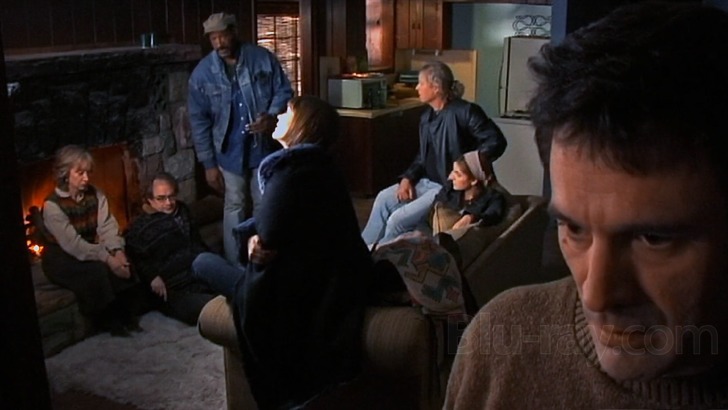
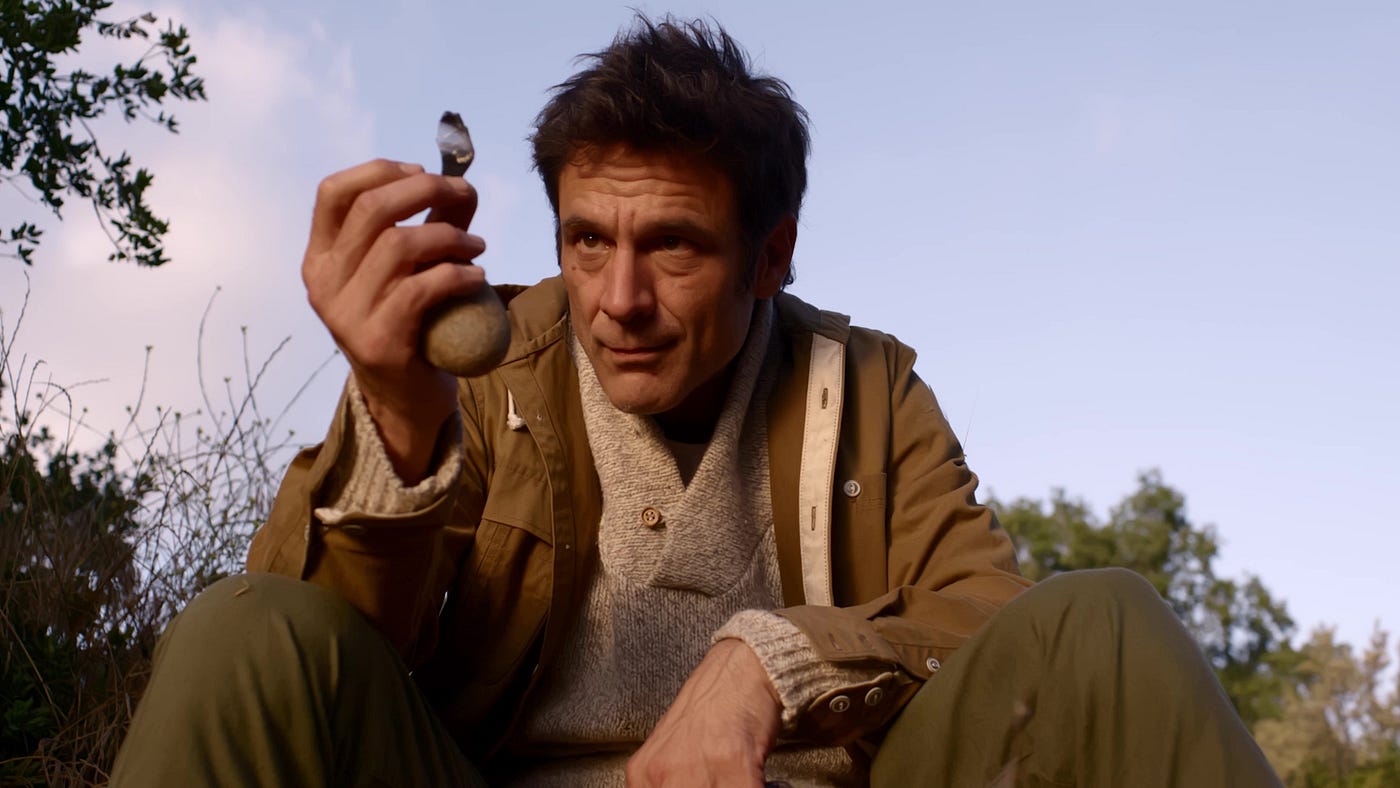
The Man from Earth
(2007)
After the Conversation
by R.E. Slater
by R.E. Slater
The door closed quietly
behind a man who kept
behind a man who kept
walking away.
No answers followed him
down the gravel drive,
No answers followed him
down the gravel drive,
but many questions had risen.
Behind were a room of scholars
standing among half-packed boxes
amid evening's lengthening shadows.
They had argued about time,
debated about memory,
held stubbornly to the limits of belief.
But none spoke at the moment.
Behind were a room of scholars
standing among half-packed boxes
amid evening's lengthening shadows.
They had argued about time,
debated about memory,
held stubbornly to the limits of belief.
But none spoke at the moment.
Each were silent in their own way.
Contemplative.
Because somewhere -
between a question, and a story -
something had shifted.
between a question, and a story -
something had shifted.
A weight had descended,
and the oldest truth in the room
was not fourteen thousand years old.
was not fourteen thousand years old.
It was the realization
that life was not something
one could possess...
Only something
one could participate in
one could possess...
Only something
one could participate in
as the oldest of processes in the universe.
R.E. Slater
March 5, 2026
@copyright R.E. Slater Publications
all rights reserved
@copyright R.E. Slater Publications
all rights reserved

